

Late Spring: From Overwhelm to Balance
Finding Your Center Before the Fire Rises
We are in a very specific moment of the year—one that often goes unnoticed.
In Traditional Chinese Medicine, spring doesn’t unfold as one continuous phase. What we are in now—late April into early May—is a transition period. The initial surge of spring has already moved through the system. Something has been set in motion.
And now, before summer fully takes over, there is a pause.
This phase is often described as the Earth period—a short buffer between seasons. It doesn’t feel like a beginning or a peak.
It often feels… unclear.
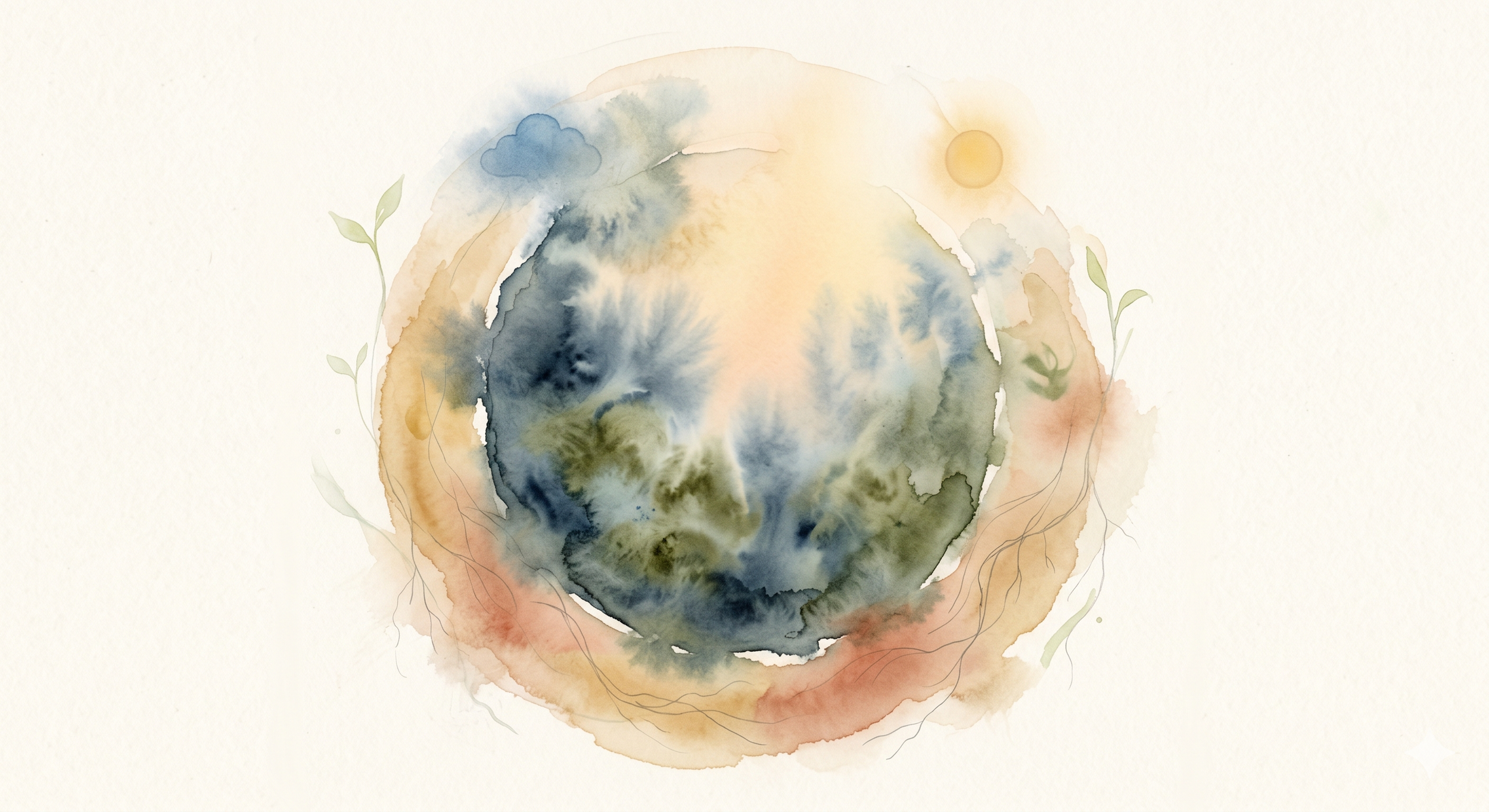
Earth is the support for grounding and centering.
Finding stability during turmoil.
When Spring Feels Like Pressure, Not Growth
Spring is associated with the Wood element and the Liver system—movement, direction, expansion.
But expansion doesn’t always feel like ease.
If the system isn’t ready, the same upward movement can feel like pressure rather than growth. In TCM, overwhelm is connected to the Liver system—movement without enough stability becomes scattered.
It can show up as:
Restlessness or low-level anxiety
Irritability without a clear cause
Comparison or a sense of being “behind”
A heavy, sluggish body despite more light and warmth
lack of motivation to initiate
There is also a specific kind of fatigue that can appear now—a spring heaviness that feels out of place.
It’s often a sign that the system is still processing what winter brought up. More light doesn’t just create clarity—it also exposes what hasn’t settled yet.
If Winter and its Water element have not been processed and consolidated well, we carry residual Dampness with us. This means effectively sluggish excess Yin is weighing down the rising Yang of Spring and Summer.
The Earth Phase: Integration Before Expansion
In the classical model, the Earth element appears briefly at the end of each season. It acts as a pivot—a moment of integration.
This is where the body “digests” the previous phase before moving on.
Physiologically, this relates to the Spleen and Stomach:
digestion
assimilation
transforming dampness and stagnation
If this phase is skipped—if we move straight from spring’s push into summer’s intensity—the system often compensates later through fatigue or burnout.
So if you’re feeling:
foggy
heavy
slower than expected
it may not be a lack of motivation. It may be that your system is still integrating.
The Yogic Lens: Grounding Prana and Finding Sthira
Yoga philosophy beautifully mirrors this TCM perspective on spring's friction:
Rising Yang = Prana Vayu: The forceful upward push of spring is like an unregulated surge of upward energy (Prana Vayu). Without an anchor, this creates mental turbulence (chitta vritti) and scattered anxiety.
Dampness = Tamas: The heavy, sluggish feeling of spring mirrors Tamas—the yogic quality of lethargy and stagnated energy. It's the physical and mental sensation of energy being blocked or bogged down rather than flowing freely.
Earth Element = Sthira & Apana Vayu: Just as TCM uses the Earth element to stabilise, Yoga calls for Sthira (steadiness) and Apana Vayu (downward, rooting energy).
Before seeking outward expansion, we must actively ground ourselves in the pause. Establishing this firm foundation ensures that when our energy finally does rise, it is steady, clear, and sustainable.
Same Symptom, Same Medicine, Different Paths
It is a beautiful thing when ancient wisdom traditions point to the exact same truth using different maps. Whether we look through the lens of a Daoist practitioner or a Yogic philosopher, the human body’s response to the changing seasons remains universal.
The Symptom: The Spring Overwhelm We feel a restless, unanchored anxiety, or a heavy, sluggish fog when the season shifts.
TCM says: The Wood element is rising too fast, or residual Dampness is weighing down the Yang.
Yoga says: Prana Vayu (upward energy) is surging without an anchor, or Tamas (lethargy) is blocking the flow.
The Medicine: Grounding Before Growing We must stabilize, anchor, and clear the stagnation before we can safely expand.
TCM says: Cultivate the Earth element. Digest, integrate, and find your center in the transition.
Yoga says: Cultivate Apana Vayu (downward energy) and Sthira (steadiness). Root downward and establish a firm foundation.
Different philosophies, different vocabularies—but exactly the same medicine. Both traditions remind us that we cannot force the bloom. True, sustainable expansion requires us to honor the pause, root deeply into the earth, and let our internal foundation settle before we reach for the sun.
Releasing the Pressure to Bloom
There is often an expectation this time of year that things should now be clear—moving, progressing, opening.
But this phase is not about full expression yet.
It is about preparing for it.
Growth that isn’t integrated doesn’t stabilise. Expansion without grounding tends to collapse.
Closing Reflection
The "Motivation Checklist":
Is it Wood Stagnation? (Do you feel frustrated and tense?)
The fix: Movement. Any movement. Break the stagnation.
Is it Water Depletion? (Do you feel deeply exhausted and cold?)
The fix: Rest and warmth. Honour the winter roots moving slow and deep.
Is it Earth Dampness? (Do you feel heavy, foggy, and stuck in "mud"?)
The fix: Clearing the clutter—physically and mentally. Combine steadiness with energy.
Somatic Perspective: Motivation is simply Qi in motion. If it’s not moving, don’t judge the "lack"—look for the "block." And sometimes its just a nervous system on overdrive needing some release.
Maybe this clarifies why we can feel this "hopeful but depressed" resulting in freeze or franticness? It’s the friction between the desire to rise (Spring) and the inability to move (Stagnation/Depletion).
—
Yours in Serenity,
Thyra-Valeska
